Connection of Memories
Connection of Memories
The Connection of Memories:
Featuring an interview by Kim Yoo-yeon, an independent curator who works is based in New York
2024. 07. 13
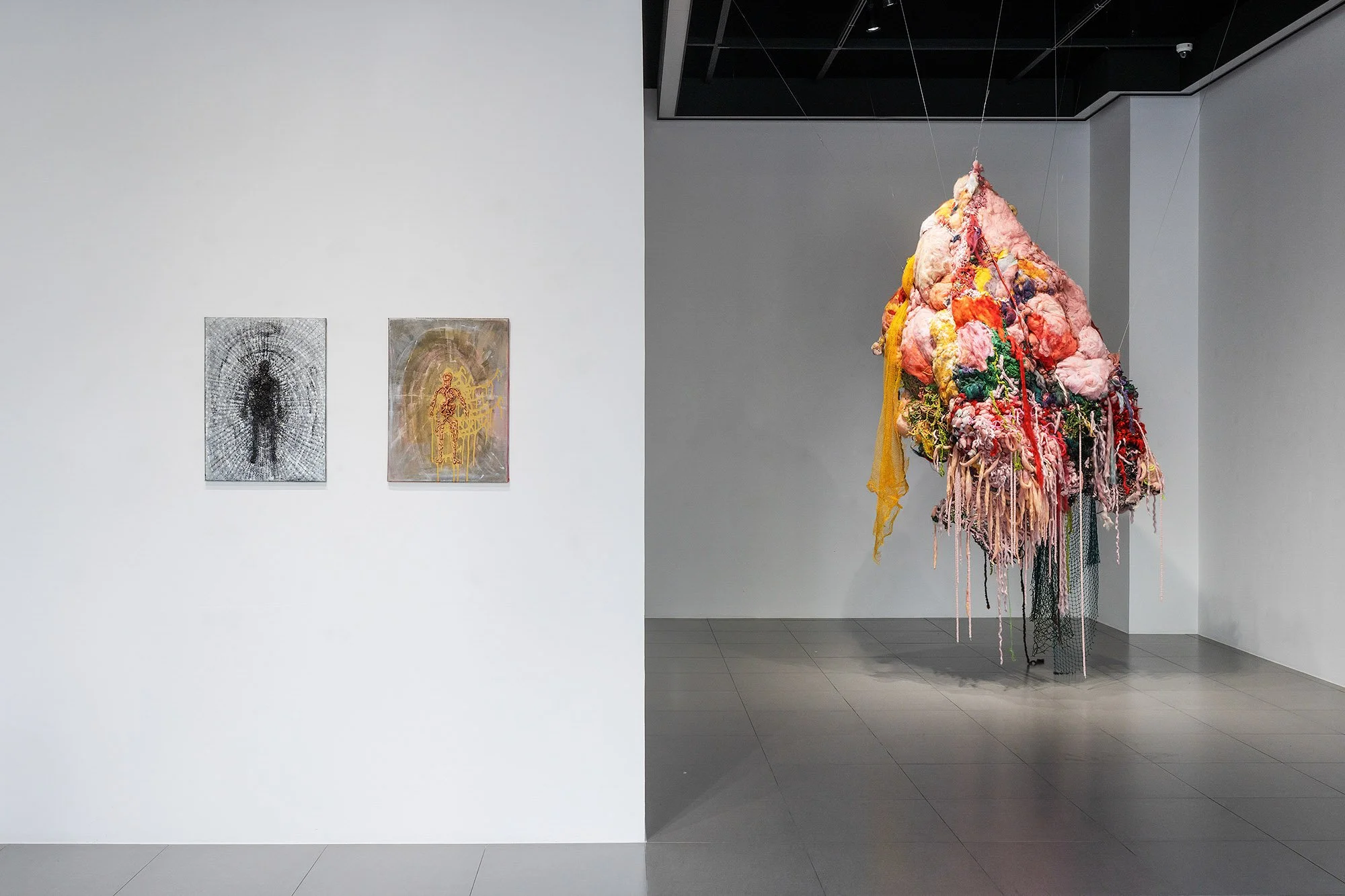
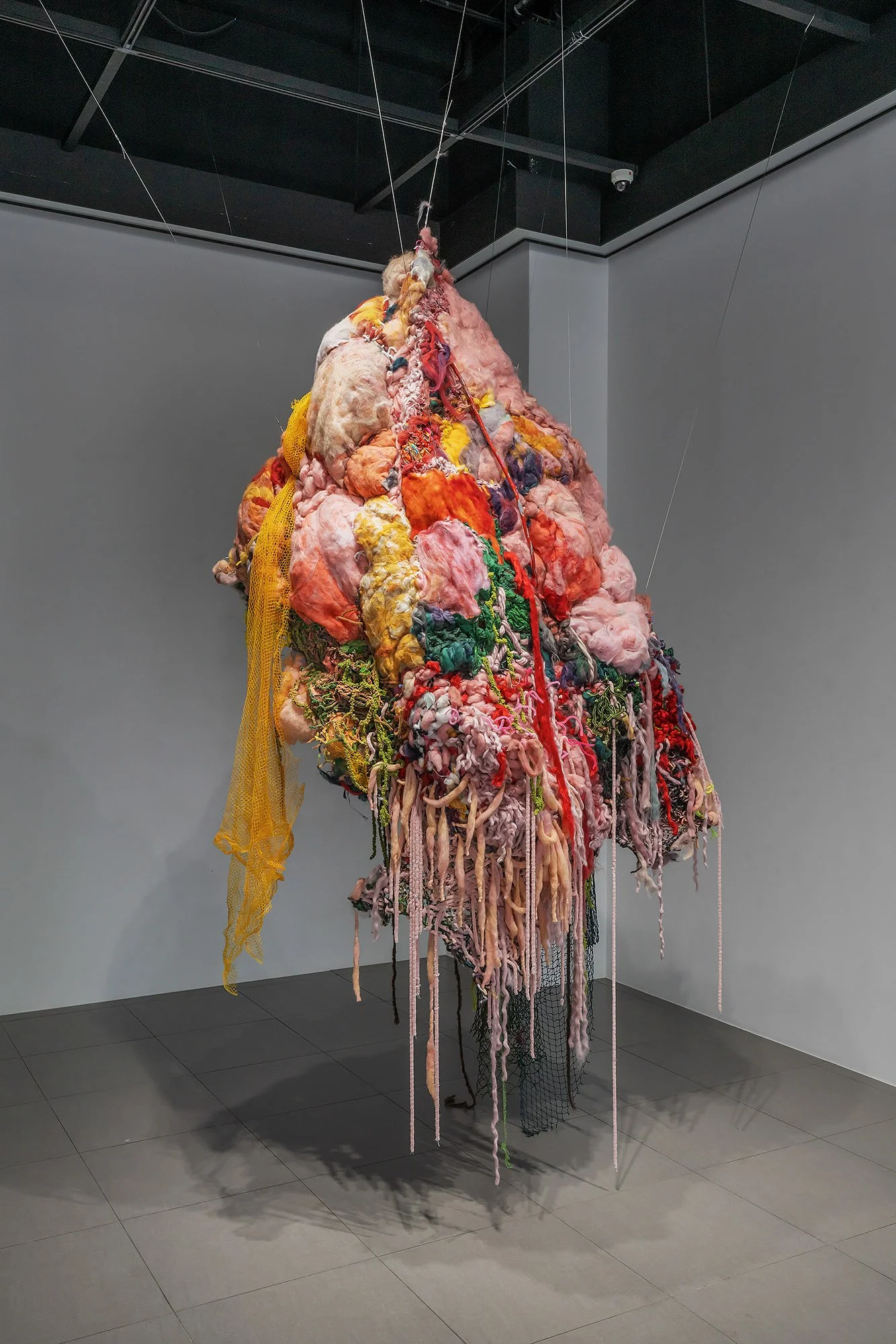
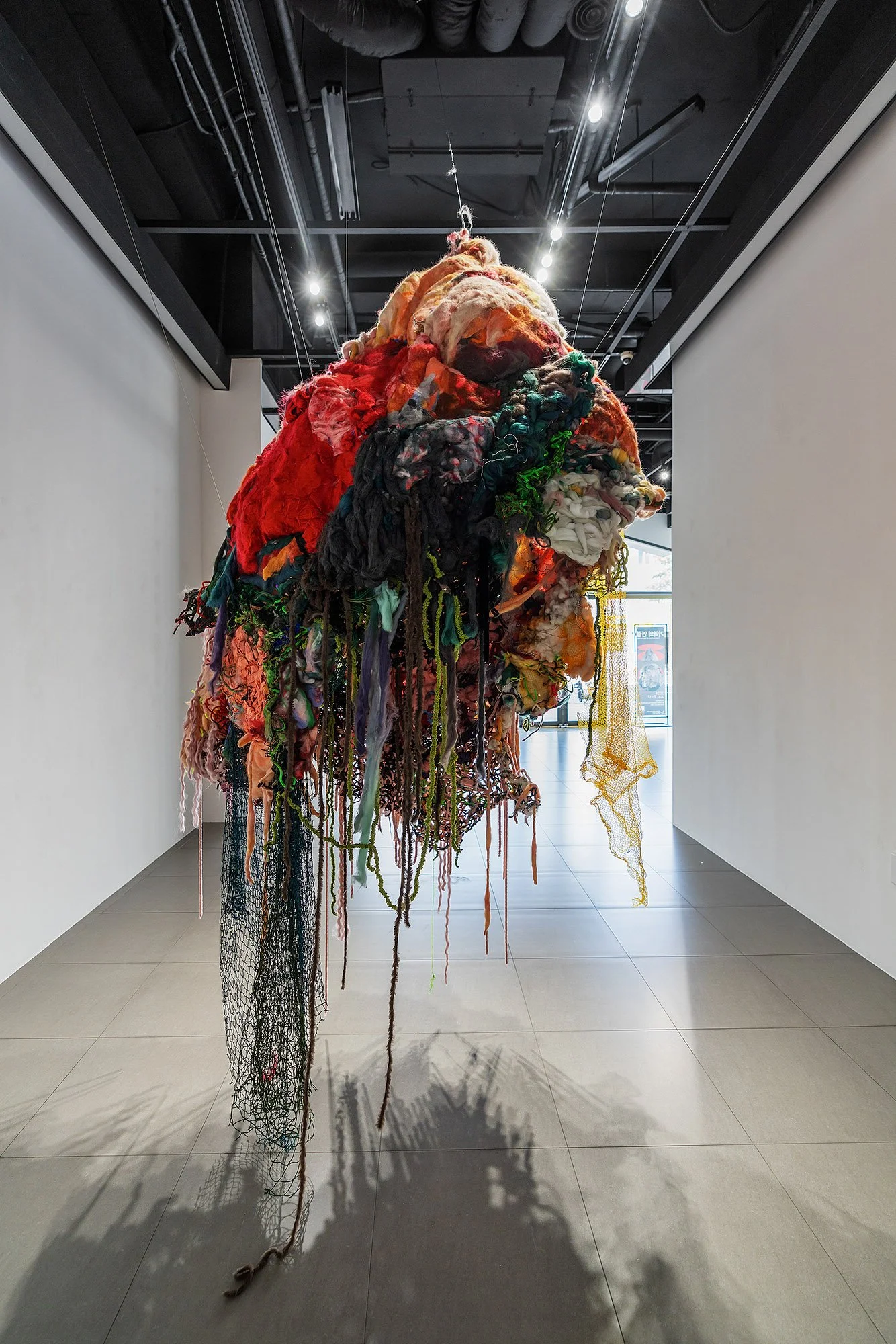
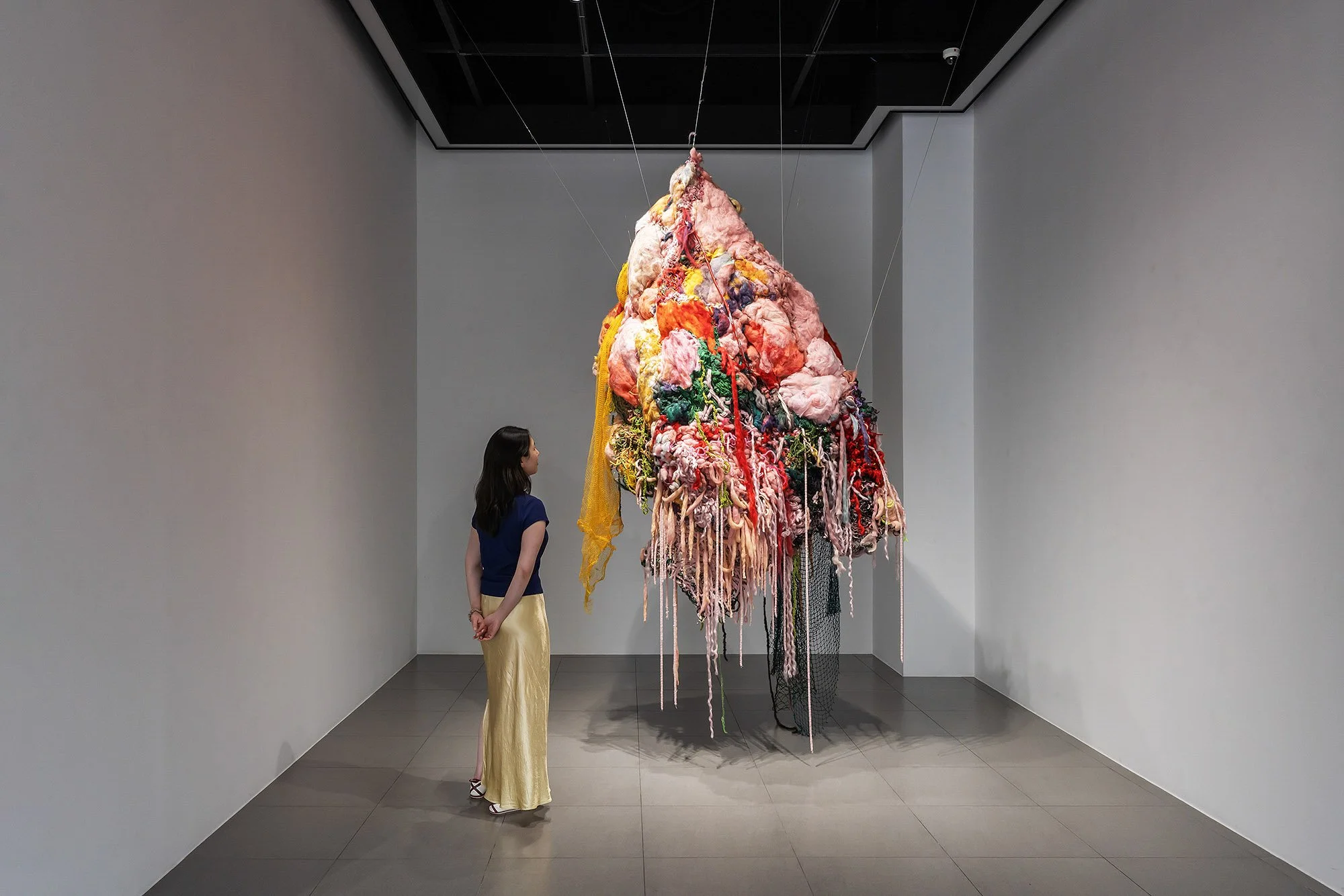
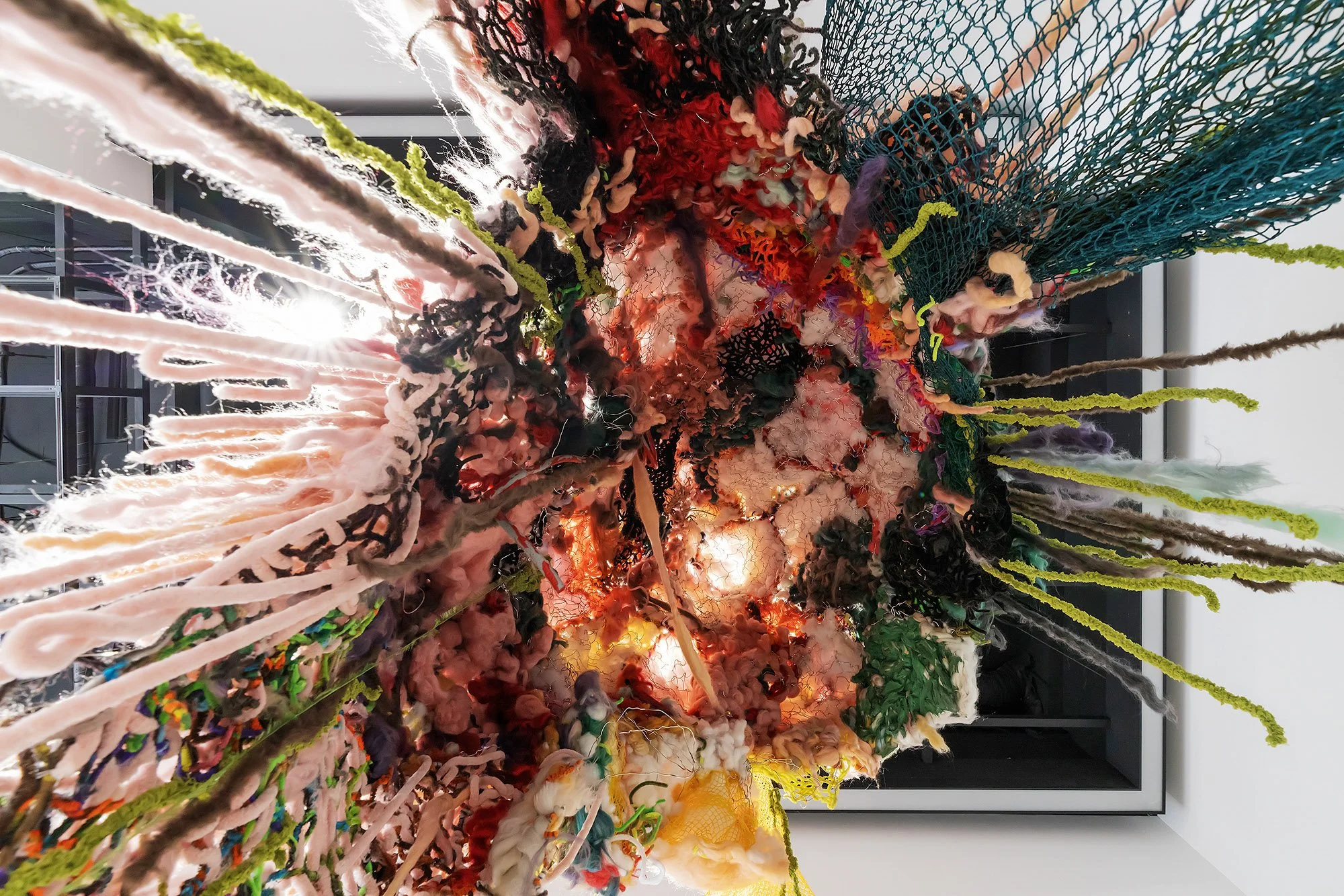
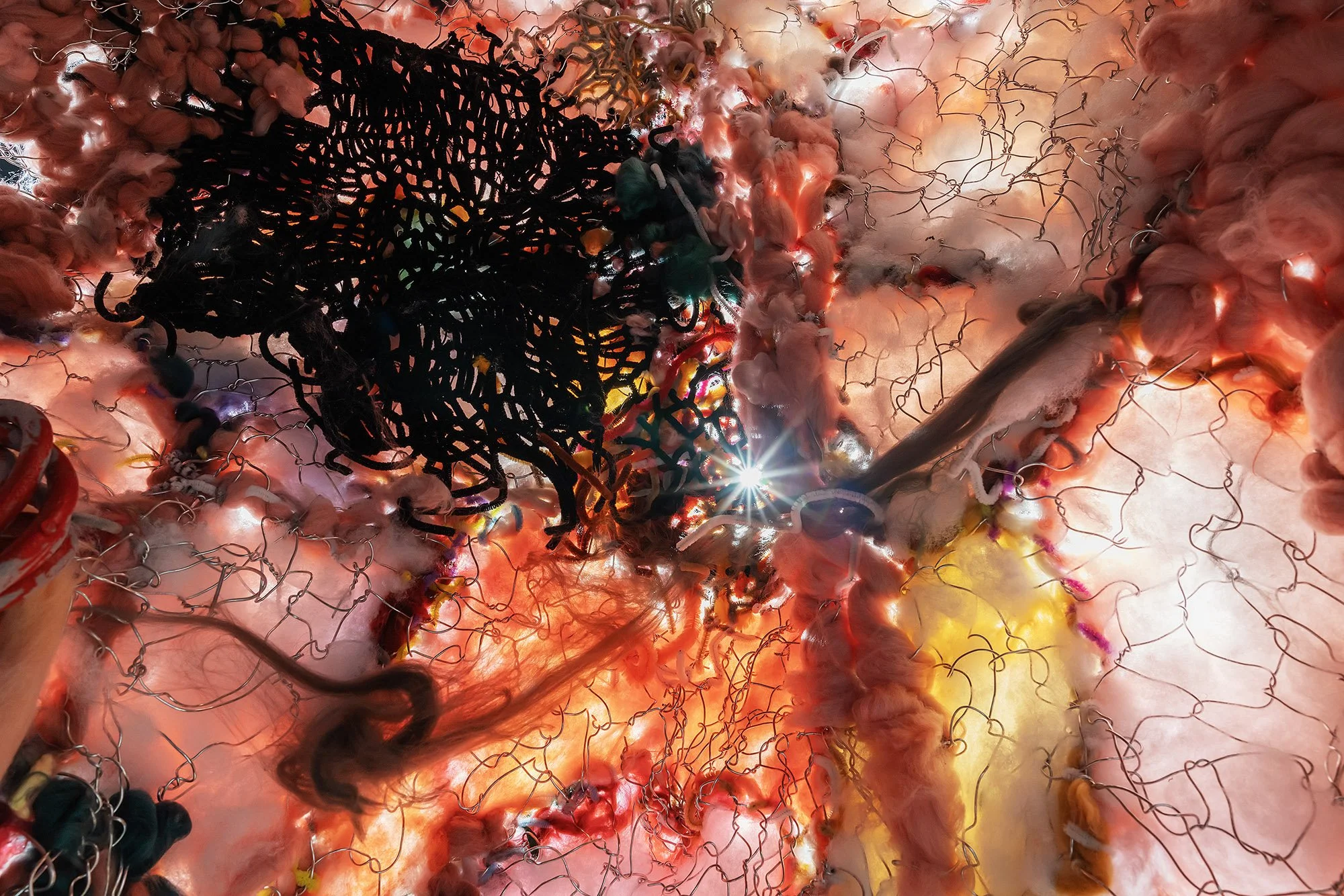
This exhibition, 'Connection of Memory' by artist Yoon Sunhee, who is active in New York, New Jersey, shows the process of being projected into nostalgia for hometown and parents by grafting the inner identity that reflects the various aspects of motherhood, femininity, and children from the artist's own existence with the ideal haven and the natural scenery <mound>.
'Connection of Memory' reproduces the joys and sorrows of life and death through the mixing technique of color and texture with installation work and painting with the theme of the shape of Mountain, and various media and collage, and further reinterpretation of the author's own body is realized.
From pencil drawings to wire structures, the artist repeats their own restless manual work with marbles, threads, felt, and soft fabrics, and explores the topics of places of memory, longing, and pain. 'Connection of Memory' is based on the mountain, which gives comfort, and is approaching the inner appearance of the artist - the intersection of despair and joy.
This exhibition is a dedication in honor of the artist's father, including her daughter’s Andrea Kim's cello performance.
PERSONAL STATEMENT:
Before and after the pandemic, how life and death were different, where my joys and sorrows came from, how my body was changing, various colors and my feelings and feelings, and thoughts were opened and released in the work. There was no answer. In addition to the way I look at myself, I have been observed in many ways in the work. I drew it as a mother and as a baby, touched, touched, rubbed, and felt the touch, and made a place of resting like a mountain. I drew a picture of my beauty, which was wet with perfume, with a soft and warm, a picture of a mountain, but also like the appearance of a grave, and a picture of a mountain like the birth of the earth. I tried to express it as a model of the mountains that are alive and breathing when they are born and active.
Mountain 22-2, acrylic on canvas, 20“x 20”, 2022
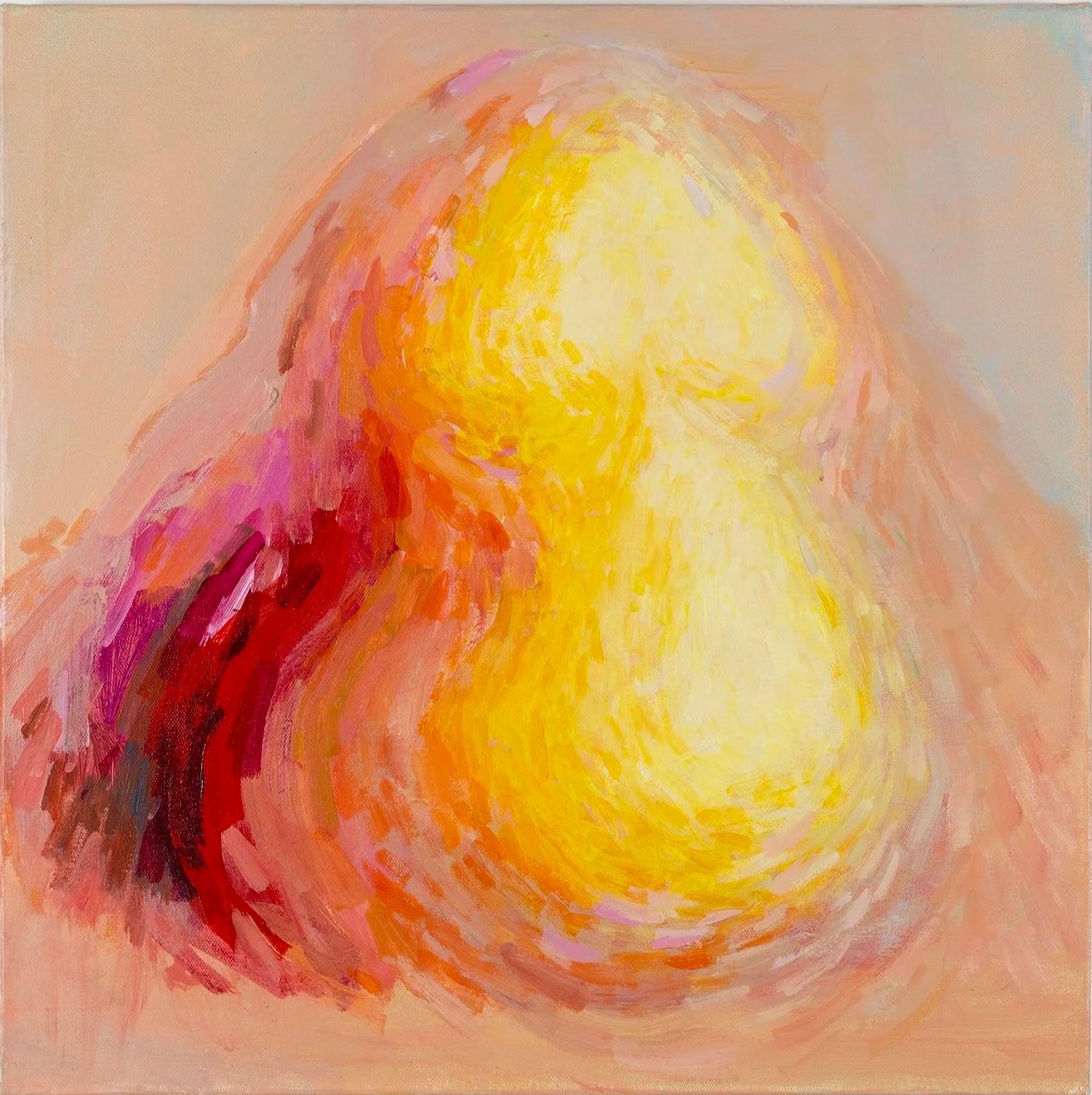
Mountain 22-1, acrylic on canvas, 20“x 20”, 2022
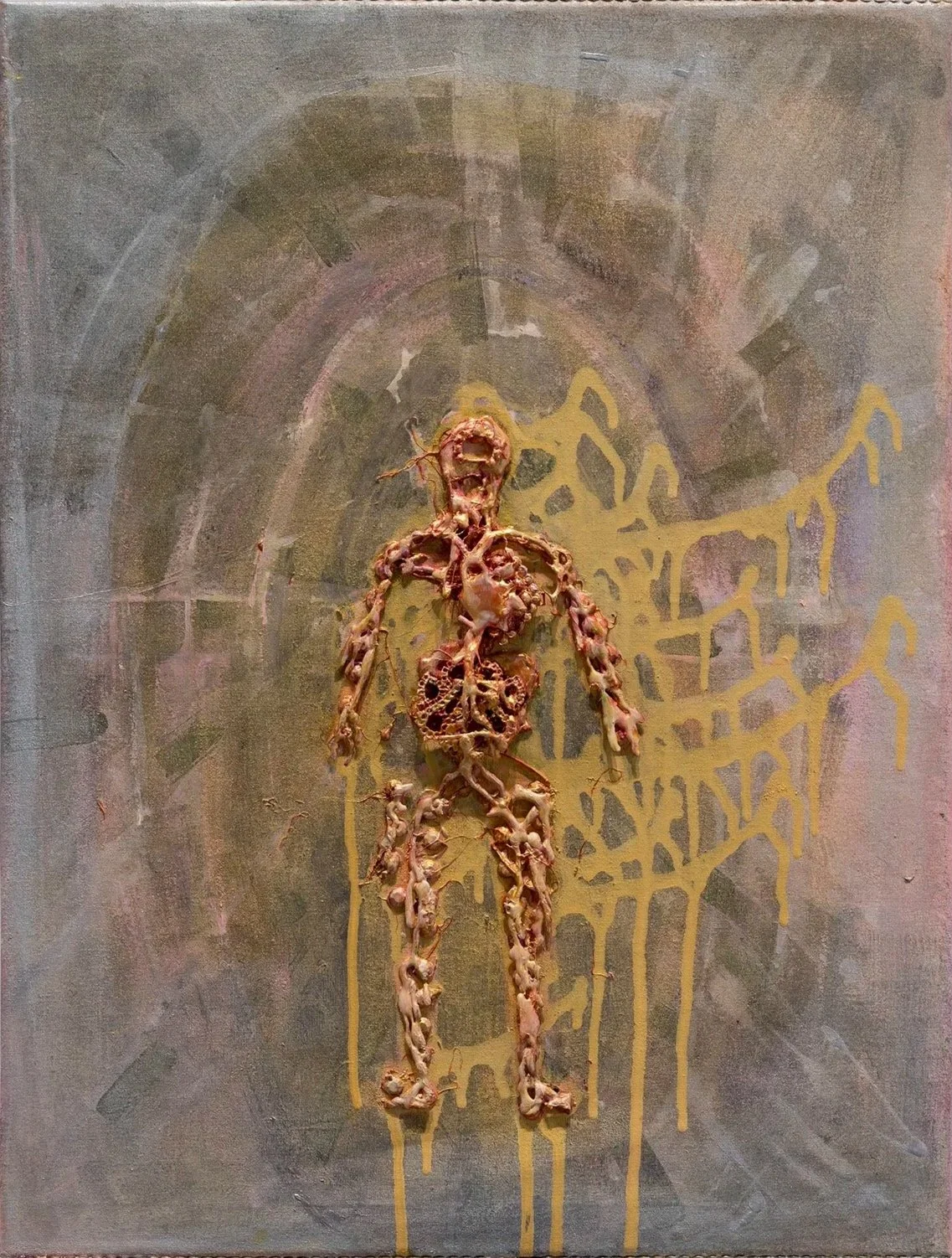
Body2024, Mixed Media, 24”x 18”, 2024
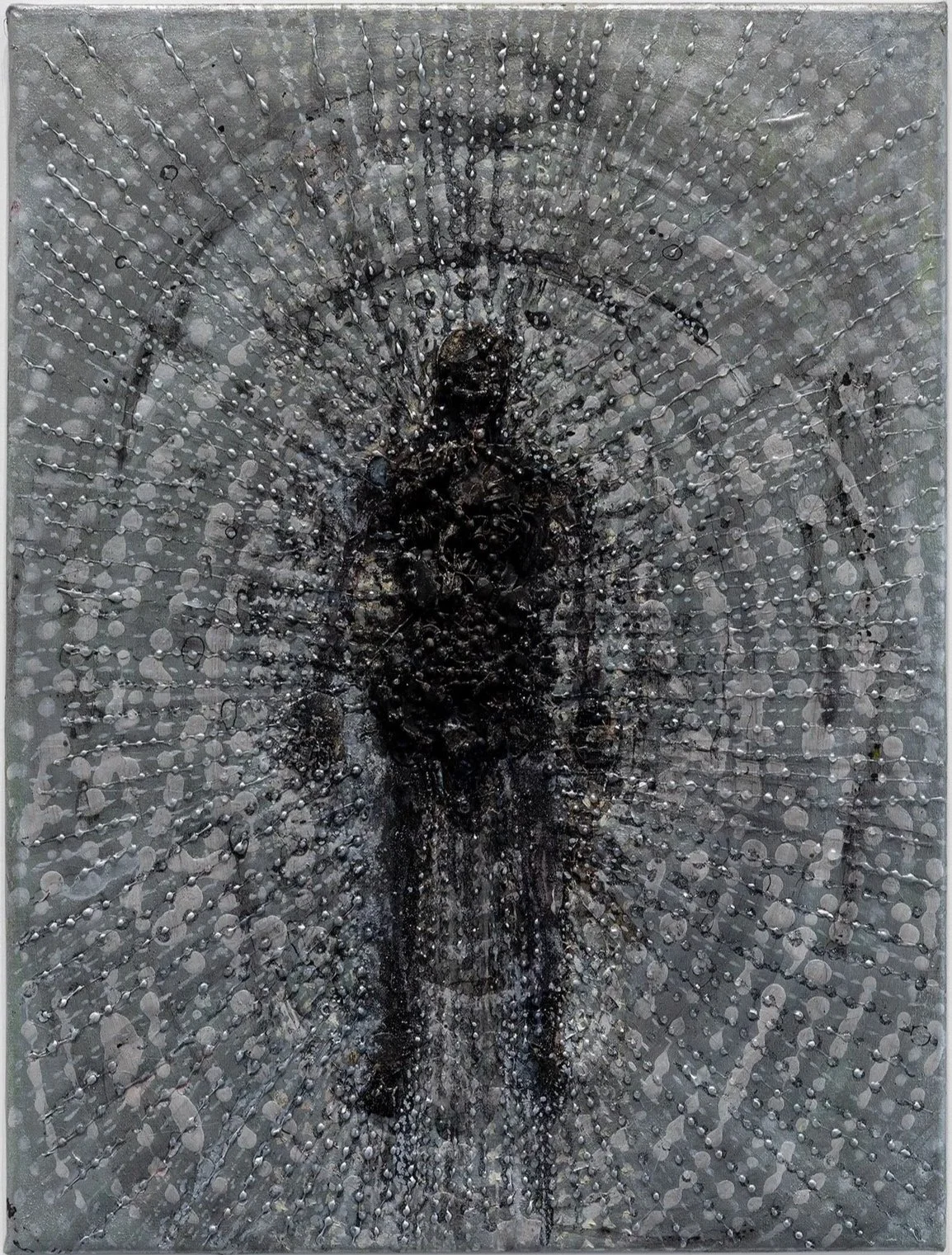
Body2024, Mixed Media, 24”x 18”, 2024
Sunhee Yoon: Since the 1990, I have spent more than half of my life in other places, so I think it is nadible that my experience that has come into contact with culture and painting has an influence on the work. The subject of my house is an important part. There was always a sense of loss and pain due to the Lord, but the memory and nostalgia for the house where I was born and I was born gave me the unstability and strength and recovery for the future that I faced as a woman, as a mother and as a family. When he was young, the house where the priest lived was at the foot of Mount Dobong and the North Mountain, and it was a private space that connected the inside and outside of the family with the building's mother and uncle. It was a private building that allowed us to establish a common body. At that time, the experience of Sansae is being touched by the most recent work, M o n t a i n riz. The mountain is the subject that is repeated in my work. The mountains of Korea are the place where the tombs of the ancestors are hidden and the tombs of the ancestors.
Sunhee Yoon: You can see the world with a wide range of views. I was able to objectively recognize how time and space, life and death, and the history of human beings are connected by visiting the temples and Amji around Jiri Mountain, Bangudae Amgakhwa in Gyeongju, Baekdusan Mountain, Xi'an and Junhwang in China, and Pompei in Litali. It is said that all cultural and artistic works are also a kind of catar that opens the door to fame and love. After returning to the United States, I heard questions about how to make a relationship with this cultural, and physical environment, and whether such a relationship can be a catalyst for my work. In the consideration of his gate, he divided many dialogues with the priests and monks, and found a way of intellectual and spiritual approach.
Sunhee Yoon: I have seen the power of ancient kings and queens in Gyeongju Cheonma Chong. The fact that the relics of such legendary military commanders were kept in a huge tomb, and the only thing left was their bones and bones. It was a beautiful appearance to show the status of the royal family in their lives. All the joys and hardships that people feel from the roddle to the grave are well expressed in the poem of Bism and Basim Borska (W i t a w a S z y m b b o r sk a ), <Heaven ) / It is well expressed in the poem 'admiration and hope' It's all good.
INTERVIEW
Interviewer: Kim Yoo-yeon
Kim Yoo-Yeon: Born in Korea and lived in the United States for a long time, I wonder how the different backing and cultural differences of the two countries have had on the life and work of an artist.
Sunhee Yoon: Since the 1990, I have spent more than half of my life in other places, so I think it is nadible that my experience that has come into contact with culture and painting has an influence on the work. The subject of my house is an important part. There was always a sense of loss and pain due to the Lord, but the memory and nostalgia for the house where I was born and I was born gave me the unstability and strength and recovery for the future that I faced as a woman, as a mother and as a family. When he was young, the house where the priest lived was at the foot of Mount Dobong and the North Mountain, and it was a private space that connected the inside and outside of the family with the building's mother and uncle. It was a private building that allowed us to establish a common body. At that time, the experience of Sansae is being touched by the most recent work, M o n t a i n riz. The mountain is the subject that is repeated in my work. The mountains of Korea are the place where the tombs of the ancestors are hidden and the tombs of the ancestors.
Kim Yoo-yeon: The works Blanket Mountain and Place Drawing Series are seen as expressing the scenery that we face while leaving the journey. In the previous dialogue, I said that I visited the Silk Road and the North American Seonju people's living areas at the intersection of Tao culture and civilization. What does 'Yee Jeong' mean to the artist?
Sunhee Yoon: You can see the world with a wide range of views. I was able to objectively recognize how time and space, life and death, and the history of human beings are connected by visiting the temples and Amji around Jiri Mountain, Bangudae Amgakhwa in Gyeongju, Baekdusan Mountain, Xi'an and Junhwang in China, and Pompei in Litali. It is said that all cultural and artistic works are also a kind of catar that opens the door to fame and love. After returning to the United States, I heard questions about how to make a relationship with this cultural, and physical environment, and whether such a relationship can be a catalyst for my work. In the consideration of his gate, he divided many dialogues with the priests and monks, and found a way of intellectual and spiritual approach.
Kim Yoo-yeon: A work in the form of a holy cloud that uses materials such as a wire mesh that combines cloth and natural oil, makes the clouds look like clouds, it looks like a long nest, and even looks like a body. In this way, the work that forms a psychological and spiritual public is seen as inducing the participation of the audience and leading them to a place where the movement of the body and the work of the relationship are made.
Sunhee Yoon: When I started painting at the Pratt Institute in 1997, I felt that the painting was not enough as a medium to express the history that I wanted to express, and the harmony of the present. I tried a different way to expand the medium and cut the canvas on the stretcher bar. And I wrapped the space around the work and transformed it into Hana's huge installation work. When it came to work, I also kept in mind the oriental compretation of the works contained in the works of the 17th century Chinese calligraphy artist Seokdo (Geumjong). I wanted to create a work that the audience could immerse in the philosophy of the public while being physical and directly participate.
Kim Yoo-yeon: A roof-like installation work made by using a multi-faceted cloth can be an iman place where visitors can actually go in and participate. In the previous dialogue, you said that you want to create a utopian environment, but what does Utopia mean to the author?
Sunhee Yoon: In my work, I wanted to create a paradise on the ground where anyone can walk as an imal place of rest. In the world, Gerbitgenstein and Dongyang ironwork gave my work a constant fragrance. In addition, the fact that the empusation of the language and the fact that the language cannot always capture the experience or reality of the whole of human beings is constantly having a constant inflight on the work. I used the mystery red color that I saw when I visited Ululu/Aerzrock (red rock) in Australia. When the sun is about to set, huge, red. Seeing the rock shining solemnly with red light, the mother's arms were reopened. Human beings are easy to gain from their own, and in such a place they want to melt the journey of the senses of self and human beings in their works.
Kim Yoo-yeon: Could you explain the material selection and the physical and physical characteristics of making works?
Sunhee Yoon: Ultimately, the physical realization of the work changes and is determined according to the choice and the material used. In the use of various materials such as desperation and dam, damyo means protective function, physical warmth, comfort and a sense of stability, and it is equivalent to another world in it. For me, making a work is to transform an body into a living thing. It is the meaning of an thing, and it is the existence that should be extreme. The artist makes the art work exist externally, but the work is also the origin of the artist's new journey towards the work.
Kim Yoo-yeon: In the self-portrait work that expresses the human body in the form of a skeleton, you can see the ceremony of the funeral (#po 2) and various ritual motives. I'm curious about what kind of experience this work can be related to.
Sunhee Yoon: I have seen the power of ancient kings and queens in Gyeongju Cheonma Chong. The fact that the relics of such legendary military commanders were kept in a huge tomb, and the only thing left was their bones and bones. It was a beautiful appearance to show the status of the royal family in their lives. All the joys and hardships that people feel from the roddle to the grave are well expressed in the poem of Bism and Basim Borska (W i t a w a S z y m b b o r sk a ), <Heaven ) / It is well expressed in the poem 'admiration and hope' It's all good.
Kim Yoo-yeon: In the artist's work, the motifs of clouds, mountains, and self-elements are clearly seen. Does the fact that it can't be separated from art and life reflect the spiritual and ancient aesthetic gods?
Sunhee Yoon: In the pursuit of the nature of the priest and the work, the environment of Jeju is constantly changing. It's the door when time and space are different according to the future from the place where I exist now. I'm trying to find a way to overcome the real experience and the philosophy of Buddhists. My works are not only calligraphy, ceramics, and Dongyang painting, but also based on the philosophy and art of the East and West. The mountain is more like my journey with the changing scenery. The journey to the mountain will be a fate.
Sunhee Yoon: When I started painting at the Pratt Institute in 1997, I felt that the painting was not enough as a medium to express the history that I wanted to express, and the harmony of the present. I tried a different way to expand the medium and cut the canvas on the stretcher bar. And I wrapped the space around the work and transformed it into Hana's huge installation work. When it came to work, I also kept in mind the oriental compretation of the works contained in the works of the 17th century Chinese calligraphy artist Seokdo (Geumjong). I wanted to create a work that the audience could immerse in the philosophy of the public while being physical and directly participate.
Sunhee Yoon: In my work, I wanted to create a paradise on the ground where anyone can walk as an imal place of rest. In the world, Gerbitgenstein and Dongyang ironwork gave my work a constant fragrance. In addition, the fact that the empusation of the language and the fact that the language cannot always capture the experience or reality of the whole of human beings is constantly having a constant inflight on the work. I used the mystery red color that I saw when I visited Ululu/Aerzrock (red rock) in Australia. When the sun is about to set, huge, red. Seeing the rock shining solemnly with red light, the mother's arms were reopened. Human beings are easy to gain from their own, and in such a place they want to melt the journey of the senses of self and human beings in their works.
Sunhee Yoon: Ultimately, the physical realization of the work changes and is determined according to the choice and the material used. In the use of various materials such as desperation and dam, damyo means protective function, physical warmth, comfort and a sense of stability, and it is equivalent to another world in it. For me, making a work is to transform an body into a living thing. It is the meaning of an thing, and it is the existence that should be extreme. The artist makes the art work exist externally, but the work is also the origin of the artist's new journey towards the work.
Sunhee Yoon: In the pursuit of the nature of the priest and the work, the environment of Jeju is constantly changing. It's the door when time and space are different according to the future from the place where I exist now. I'm trying to find a way to overcome the real experience and the philosophy of Buddhists. My works are not only calligraphy, ceramics, and Dongyang painting, but also based on the philosophy and art of the East and West. The mountain is more like my journey with the changing scenery. The journey to the mountain will be a fate.